
KALRO Hosts 2nd Scientific Week: Charting the Future of Agriculture
Posted by EDITORIAL
KALRO Hosts 2nd Scientific Week in Nairobi, bringing together scientists, farmers, policymakers and agribusiness leaders to showcase innovations in climate-smart agriculture, food safety, aflatoxin control, AI, biotechnology and sustainable food systems.
In Summary
- The 2nd KALRO Scientific Conference and Innovation Expo brought together researchers, farmers, policymakers, agribusiness leaders and innovators to explore how science can drive sustainable agrifood systems, climate resilience and improved livelihoods.
- “Mahindi bila Aflasafe si safe!” KALRO Board Chairman Dr. Thuo Mathenge warned that aflatoxin contamination remains a serious public health threat in Kenya, while highlighting Aflasafe KE01, a breakthrough technology capable of reducing contamination by up to 98 percent.
- More than 300 scientific papers, emerging technologies and commercial innovations showcased how research can move beyond laboratories to strengthen food security, create jobs, improve farmer incomes and transform agriculture into a competitive business sector.
Also Read: WFO 2026 Africas Farmers and the Future of food systems
Also Read: Kenyas food future from rainfed struggles to climate-smart agriculture
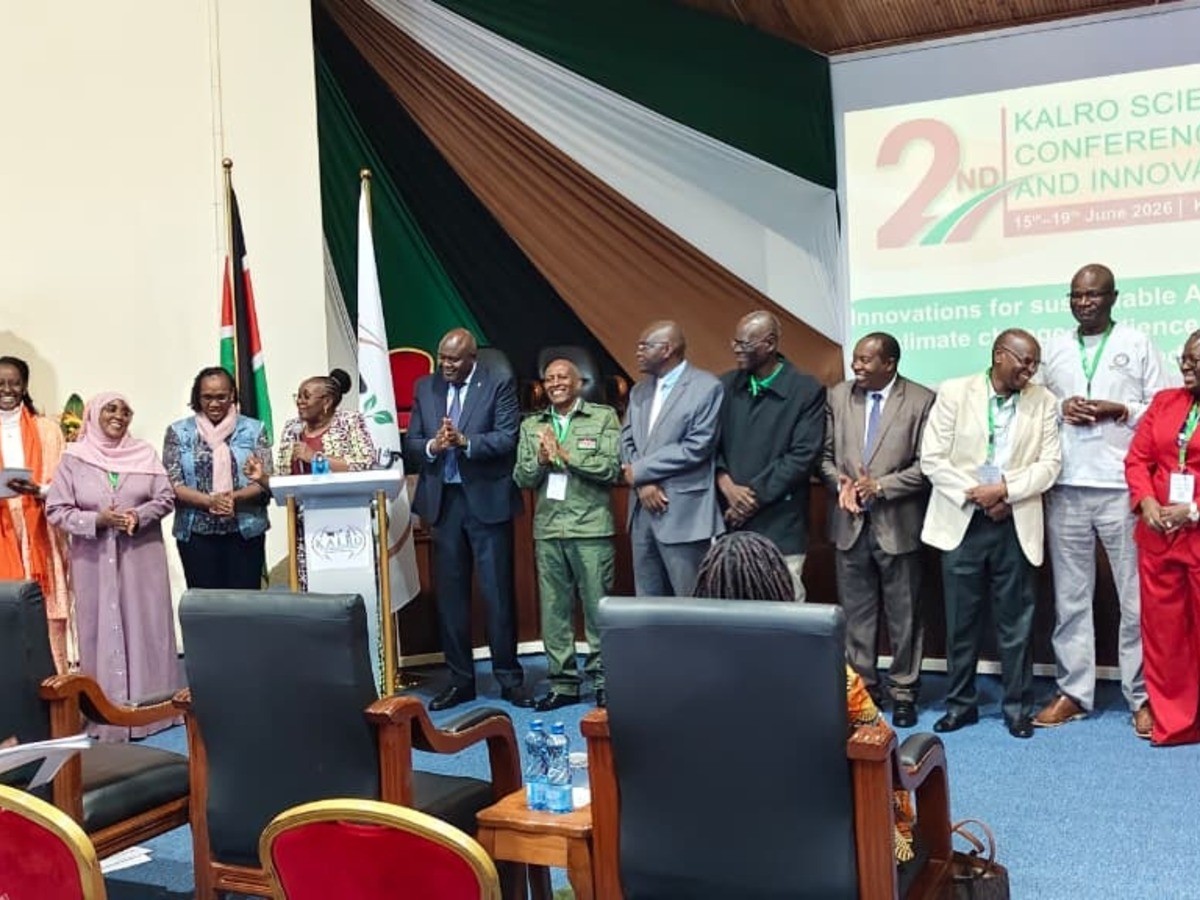
Today marked the conclusion of the 2nd KALRO Scientific Conference and Innovation Expo 2026, a week-long gathering that transformed the headquarters of the Kenya Agricultural and Livestock Research Organization (KALRO) in Loresho, Nairobi, into a hub of scientific discovery, innovation and dialogue on the future of agriculture.
Held from June 15 to June 19, the conference brought together a diverse mix of participants ranging from researchers and academics to farmers, policymakers, private sector leaders, development partners and young innovators. Their shared mission was to examine how science can address some of the most pressing agricultural challenges facing Kenya and the wider region, including climate change, food insecurity, disease outbreaks, low productivity and limited market access.
Under the theme of advancing innovations for sustainable agrifood systems, climate resilience and improved livelihoods, the event demonstrated that science remains one of the most powerful tools available to secure the future of food production. Throughout the week, experts presented research findings, emerging technologies and practical solutions designed to help farmers adapt to changing climatic conditions while increasing productivity and profitability.
More than 300 scientific papers were presented by researchers from KALRO and partner institutions, covering a broad range of topics including artificial intelligence in agriculture, biotechnology, food safety, climate-smart farming, livestock development and value addition. The presentations highlighted how modern science is increasingly shaping agricultural systems and creating opportunities for farmers to produce more with fewer resources while protecting the environment.

KALRO Board Chairman Dr. Thuo Matheng
One of the strongest messages to emerge from the conference came from KALRO Board Chairman Dr. Thuo Mathenge, who raised concerns over the continued threat posed by aflatoxin contamination in Kenya. Addressing participants during the closing session, Dr. Mathenge delivered a memorable warning: “Mahindi bila Aflasafe si safe.”
Also Read: Gm maize standoff and how policy delays are contributors to kenyas food crisis
Also Read: How late blight disease is robbing potatoes farmers billions and the fight
His remarks underscored the seriousness of a challenge that continues to affect food safety and public health across the country. Aflatoxins, toxic substances produced by certain fungi, have been linked to liver cancer, weakened immunity, impaired child growth and reduced livestock productivity. Recalling the devastating aflatoxin-related fatalities that occurred in Eastern Kenya years ago, Dr. Mathenge noted that contamination remains a persistent threat, exposing millions of consumers to potentially unsafe food.
To confront the challenge, KALRO has developed Aflasafe KE01, a biological control technology that can reduce aflatoxin contamination in maize, sorghum and groundnuts by up to 98 percent. Beyond protecting human health, the innovation has the potential to improve food quality standards and expand farmers’ access to both domestic and international markets. Dr. Mathenge emphasized that widespread awareness and adoption will be critical to unlocking the technology’s full impact and called on legislators, the media and other stakeholders to support national efforts to combat aflatoxin contamination.
The conference also showcased innovations aimed at strengthening resilience in the face of climate change. Among them was the Tajirika cassava variety, a drought-tolerant and disease-resistant crop developed to help farmers increase yields while reducing production risks. The variety also offers opportunities for processing into flour and starch, creating a pathway for greater value addition and reducing dependence on imported starch products.
Throughout the week, discussions repeatedly returned to a central theme: agriculture must increasingly be viewed not only as a source of food but also as a business. This perspective was reinforced by KALRO Board Member Judy, who urged stakeholders to bridge the gap between scientific research and commercial application.
Speaking on behalf of the Board’s Commercialization Committee, she argued that agricultural innovations should not remain confined to laboratories but must be translated into market-ready products capable of generating economic growth and creating jobs. She pointed to successful examples already emerging from KALRO’s research programmes, including dairy products, yogurt and commercialized soybean products, demonstrating that scientific discoveries can become viable business ventures that benefit farmers and consumers alike.
Her message reflected a broader reality facing many African economies. While countries often focus on extractive industries such as oil and minerals, agriculture remains one of the continent’s most sustainable and inclusive pathways to economic transformation. When backed by research, innovation and investment, the sector has the potential to drive industrial growth, strengthen rural economies and improve national food security.
The Innovation Expo running alongside the conference provided a practical demonstration of this vision. Agribusinesses, technology developers and researchers exhibited cutting-edge solutions designed to move science from research institutions into farmers’ fields. Climate-smart technologies, improved seed varieties, livestock innovations and digital agricultural tools illustrated how research can be translated into tangible outcomes that improve livelihoods.
KALRO Director General Remarks Dr. Patrick K. Ketiem described the conference as an important step in identifying and addressing the missing links in agricultural transformation. He emphasized that building a resilient and productive agricultural sector requires collective action and a greater appreciation of the role farmers play in sustaining society.
Dr. Ketiem reaffirmed KALRO’s commitment to developing technologies that respond to real-world challenges and pledged continued support for farmers and agribusinesses seeking to adopt innovation. He also encouraged young people to view agriculture as a sector rich with entrepreneurial opportunities, capable of creating employment and driving economic growth in the years ahead.
Speaking on behalf of the Principal Secretary for Agriculture, Dr. Paul Kiprono Rono, Dr. Mathenge offered a final reflection on the significance of science in securing Kenya’s future. He described scientists as the true engines of food security and warned that climate change is no longer a future concern but a present-day reality demanding immediate action. His message to young people was equally direct. Agriculture, he argued, is not reserved for those with large amounts of capital but for those willing to apply creativity, knowledge and determination. “You don’t need money to make money, but brains,” he said.
As the curtain falls on the 2nd KALRO Scientific Conference and Innovation Expo, one message stands out above all others: the future of agriculture will be shaped by science. From combating aflatoxins and developing climate-resilient crops to commercializing research and embracing digital technologies, innovation is increasingly becoming the foundation upon which food security, economic growth and sustainable development depend. The challenge now is ensuring that these scientific breakthroughs move beyond conference halls and research laboratories to reach the farmers whose success ultimately determines the nation’s agricultural future.