
Kenya Courts Investors to Turn Forest Restoration Into a Green Economy
Posted by EDITORIAL
Kenya seeks greater investment in forest restoration and climate resilience as the government unveils plans to expand cocoa, avocado and commercial tree farming while pursuing a 30% tree and forest cover target by 2032.
In Summary:
Kenya is positioning ecosystem restoration as both an environmental necessity and an economic growth strategy, with the government urging investors, development partners and communities to finance large-scale restoration projects that will expand forest cover, create green jobs, strengthen climate resilience and unlock new agricultural value chains, including cocoa, avocado and oil-producing trees.
Also Read: How Kenya’s Northlands Communities are Restoring the RangeLands
Also Read: Kenyas 10 Years Plan to Restore Mount Elgon Ecosystem
Kenya is shifting the conversation on forest restoration from environmental conservation to economic transformation, unveiling an ambitious strategy that places ecosystem recovery at the heart of the country's climate agenda while opening new opportunities for investment, employment and rural prosperity.
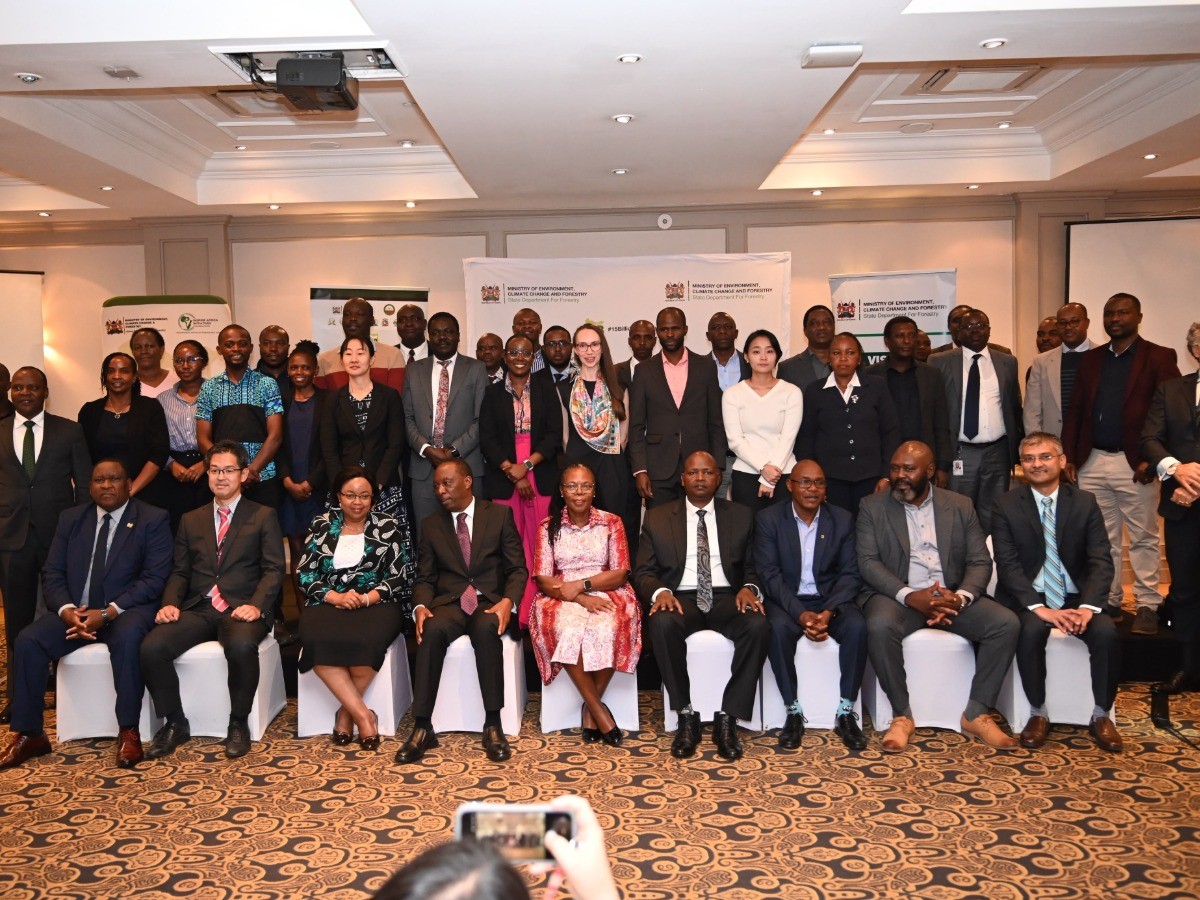
The renewed push was outlined during a high-level donors' roundtable convened in Nairobi by the Ministry of Environment, Climate Change and Forestry, through the State Department for Forestry, in partnership with the Japan International Cooperation Agency (JICA). The meeting brought together development partners, conservation stakeholders and private sector representatives to explore financing models capable of accelerating landscape restoration across the country.
Forestry Principal Secretary Gitonga Mugambi said the scale of Kenya's environmental challenges demands collective action that extends well beyond government institutions. He argued that restoring degraded forests, drylands and coastal ecosystems should be viewed as a long-term national investment capable of generating economic returns while safeguarding the country's natural resources.

Forestry Principal Secretary Gitonga Mugambi| Credits: The Pressman
According to the Principal Secretary, Kenya's arid and semi-arid lands cover nearly nine-tenths of the country's territory and represent one of its greatest untapped assets. While these landscapes continue to experience land degradation, prolonged droughts and biodiversity loss, they also offer significant opportunities for climate adaptation, sustainable agriculture and nature-based enterprises if managed effectively.
The government's restoration programme is anchored in the National Landscape and Ecosystem Restoration Strategy 2023–2032, which targets the rehabilitation of more than 10 million hectares of degraded land while supporting Kenya's commitment to achieve 30 percent tree and forest cover by 2032. Officials say the strategy is designed not only to rebuild ecosystems but also to stimulate local economies through green employment, improved food production and stronger community resilience against climate shocks.
Rather than focusing solely on tree planting campaigns, the government is promoting restoration as an integrated development agenda. Mugambi said healthy landscapes provide the foundation for agricultural productivity, water security, biodiversity conservation and sustainable livelihoods, making restoration a critical pillar of Kenya's broader economic future.
Recognizing that public resources alone will not meet the scale of financing required, the government appealed to development agencies, financial institutions and private investors to support restoration projects through strategic partnerships, direct investment and innovative financing mechanisms. County governments, research institutions, civil society organisations and local communities are also expected to play central roles in delivering the programme.
Among the government's flagship initiatives is a nationwide expansion of commercial agroforestry. Officials are prioritising cocoa cultivation as a new high-value agricultural enterprise capable of diversifying farmers' incomes while supporting reforestation efforts. Mugambi said the programme has already been launched, with the government targeting the establishment of one billion cocoa trees as the first phase of what could become an even larger national undertaking.
The forestry agenda also includes a major expansion of avocado farming through the planting of an additional one billion trees, alongside increased cultivation of oil-producing tree species aimed at reducing Kenya's dependence on imported edible oils. The government believes these value chains will generate employment opportunities, strengthen rural economies and increase export earnings while contributing to national restoration targets.
To accelerate implementation, development partners were encouraged to support seedling production, establish commercial nurseries or provide direct financial assistance that would enable communities to participate more actively in restoration programmes.
Also Read: How Kenya Marked Mazingira Day with Nationwide Campaign to plant fruit trees
Community participation has emerged as a defining feature of the government's evolving conservation strategy. Rathe8r than relying exclusively on state agencies to protect forests, authorities are promoting locally driven conservation models that integrate environmental stewardship with income-generating activities. Officials say communities are more likely to safeguard forests when restoration programmes also improve household livelihoods.
The government pointed to the restoration of Kaptagat Forest as evidence that collaborative conservation can deliver measurable results. By working closely with local communities, county governments and conservation agencies, the initiative has demonstrated that alternative livelihood opportunities can significantly reduce pressure on forest ecosystems while improving household incomes.
Innovative approaches such as communal livestock management centres have also been introduced to minimise grazing inside protected forests. Officials say the model has helped curb encroachment while improving livestock productivity through better feeding systems and organised animal management.
Kenya Forest Service Chief Conservator of Forests Alexander Lemarkoko said forestry has evolved into one of the country's most strategic sectors, supporting agriculture, water security, biodiversity conservation, climate resilience and rural livelihoods. He noted that sustained investment and stronger community participation will be essential if Kenya is to achieve its long-term restoration ambitions.
Lemarkoko further observed that successful forest management increasingly depends on empowering local leadership and strengthening participatory conservation frameworks. He called for new financing solutions capable of attracting both public and private investment into restoration programmes, arguing that forestry now represents one of Kenya's strongest opportunities to simultaneously advance environmental sustainability and inclusive economic growth.
As Kenya intensifies efforts to restore degraded landscapes, the government's message to investors and development partners is becoming increasingly clear: restoring forests is no longer viewed solely as a conservation imperative, but as a catalyst for economic resilience, climate action and sustainable national development.