
17th IUCEA Annual Meeting: East African Universities Unite to Shape the Future of Higher Education
Posted by EDITORIAL
The 17th IUCEA Annual Meeting in Nairobi brings together over 100 East African universities to strengthen higher education through partnerships, research, innovation and regional policy reforms that will shape the future of universities across the continent.
In Summary
More than 100 universities from across East Africa have converged in Nairobi for the 17th Inter-University Council for East Africa (IUCEA) Annual Meeting and Conference, a high-level forum expected to redefine the region's higher education agenda through stronger partnerships, collaborative research, quality assurance and policy reforms aimed at producing globally competitive graduates and driving sustainable socio-economic development.

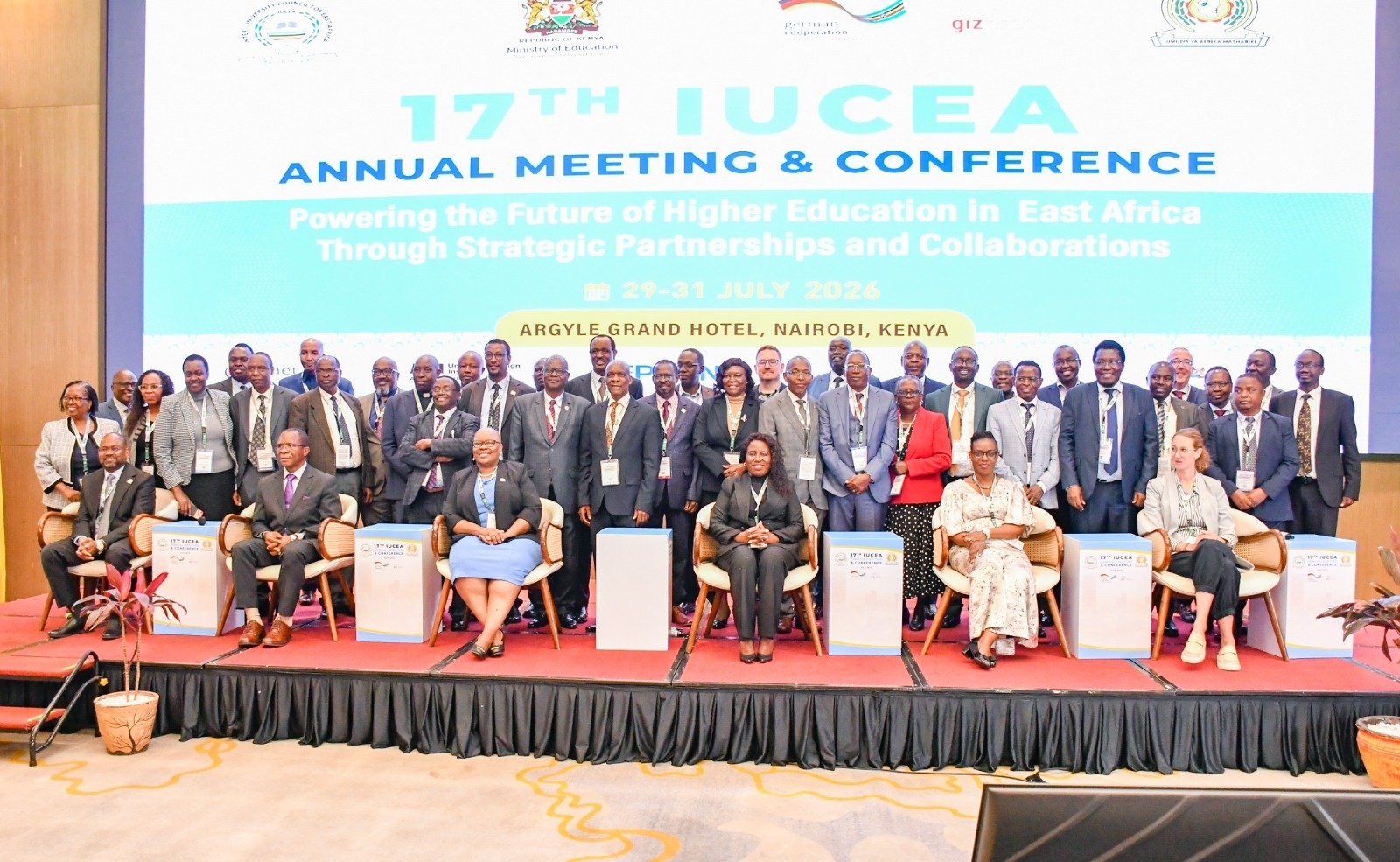
At a time when African universities are under growing pressure to produce industry-ready graduates, accelerate research and respond to rapidly evolving economic and technological demands, higher education leaders from across East Africa have gathered in Nairobi for the 17th Inter-University Council for East Africa (IUCEA) Annual Meeting and Conference.
The three-day conference, running from July 29 to 31, has brought together vice-chancellors, policymakers, researchers, development partners and academic leaders from more than 100 member universities to chart a common vision for the future of higher education in the East African Community (EAC).
Held under the theme "Powering the Future of Higher Education in East Africa Through Strategic Partnerships and Collaborations," the meeting reflects a growing recognition that universities can no longer operate as isolated institutions if they are to remain competitive in an increasingly interconnected global knowledge economy.
Across the continent, universities are confronting common challenges ranging from constrained public financing and rising student enrolment to curriculum reforms, rapid technological change and increasing expectations for research that delivers practical solutions to society. Against this backdrop, the conference seeks to strengthen regional cooperation in academic quality, research excellence, innovation, mobility of students and faculty, and harmonisation of higher education standards.
The University of Nairobi, one of the region's leading public institutions, is among the universities participating in the conference. In a statement, the university noted that the gathering comes at a defining moment for higher education in East Africa, where decisions made today will influence policies, partnerships and research priorities for generations.
"The University of Nairobi joins more than 100 member universities of the Inter-University Council for East Africa at the 17th IUCEA Annual Meeting and Conference. As the region confronts new demands on higher education, this forum will define the policies, partnerships and research agenda that will strengthen universities in the region for generations to come. UoN is proud to be part of that collective responsibility," the institution said.
For many higher education experts, regional collaboration has become increasingly important as universities seek to improve graduate employability, attract international research funding and contribute more effectively to national development agendas. Rather than competing in isolation, universities are increasingly being encouraged to pool expertise, share infrastructure, jointly supervise research and develop programmes that respond to regional labour market needs.
Addressing delegates, Prof. Rose Nanyonga, Acting Chairperson of the IUCEA Executive Committee, emphasized that the success of universities should no longer be measured solely by academic instruction but by their broader contribution to society.
"Excellence is measured not only by what universities teach, but by the relevance of our graduates, the impact of our research, the strength of partnerships and the contribution our institutions make to society."
Her remarks underscore a growing shift across African higher education towards outcome-based learning, innovation ecosystems and stronger links between universities, industry and government.
The conference also highlighted the importance of collective action in addressing regional educational challenges. Prof. Idris Rai stressed that transformative change requires institutions to work together rather than independently.
"No university, however strong, can transform higher education alone. Stronger partnerships are essential to transforming higher education across the region."
That message resonates beyond East Africa. Across Africa, universities are increasingly positioning themselves as drivers of industrialization, climate resilience, digital transformation, public health innovation and entrepreneurship. Governments and development partners are likewise placing greater emphasis on research collaboration and regional integration as critical pillars for achieving the African Union's Agenda 2063 and the Sustainable Development Goals.
The IUCEA conference is therefore more than an annual academic gathering. It represents a strategic platform for aligning university education with regional priorities while strengthening the East African Community's ambition to build a competitive knowledge economy capable of producing solutions for both local and global challenges.
As deliberations continue in Nairobi, the outcomes are expected to influence future policies on quality assurance, academic mobility, research collaboration, digital learning, innovation ecosystems and university governance—setting the direction for East Africa's higher education landscape for years to come.