
Rising Donkey Skin Demand Fuels Theft and Illegal Trade in Kenya, NCRC Report Reveals Growing Criminal Networks
Posted by EDITORIAL
A new NCRC report reveals how rising international demand for donkey skins is driving donkey theft and illegal trade in Kenya. Learn about the criminal networks involved, Kenya's policies, the declining donkey population and why stronger enforcement is urgently needed.
In Summary
- A surge in global demand for donkey skins, particularly for the production of ejiao, continues to drive theft and illegal trafficking of donkeys across Kenya despite government bans.
- A new National Crime Research Centre (NCRC) report warns that organized criminal networks are exploiting enforcement gaps, threatening rural livelihoods, food security and Kenya's dwindling donkey population.
- Experts are calling for stronger laws, better enforcement, improved national donkey population data and enhanced regional cooperation to dismantle the illegal trade.
Also Read: On World Horse Day Kenya love for Horses met a welfare reckoning
The humble donkey has become the unlikely target of an increasingly lucrative international trade that is quietly reshaping rural livelihoods across Africa. While for generations donkeys have served as indispensable working animals—transporting water, farm produce, firewood and goods for millions of households—their skins have become highly sought-after commodities in global markets, particularly for the manufacture of ejiao, a traditional gelatin product widely consumed in China. As international demand continues to outstrip domestic donkey supplies in Asia, Africa has increasingly become a source of donkey hides, creating strong financial incentives for theft, illegal slaughter and cross-border trafficking.
China remains by far the world's largest consumer and importer of donkey skins due to the demand for ejiao. Hong Kong serves as another significant trading and re-export hub, while Vietnam has increasingly emerged as a transit and processing route for donkey skin products destined for Asian markets. The sustained demand from these markets has created transnational supply chains that have stretched deep into African countries, including Kenya, where criminal networks exploit weak enforcement mechanisms and porous borders to source donkey hides illegally.
It is against this backdrop that the National Crime Research Centre (NCRC) is set to launch its Report on Theft and Illegal Trade in Donkey Skins and Related Products in Kenya, the first comprehensive national study examining the scale, drivers and socio-economic consequences of donkey theft and the illicit trade in donkey skins and related products.
According to the report, the illegal trade has evolved beyond isolated theft into sophisticated criminal operations involving organized supply chains, brokers, transporters and cross-border trafficking networks. The findings indicate that the illicit business is driven largely by international demand while exploiting weaknesses in law enforcement, intelligence sharing and regulatory oversight.
Principal Research Analyst at NCRC, Dr. Dickson Gitonga, noted that the consequences extend well beyond animal welfare.
"Our research shows that the illegal donkey skin trade is driven by strong international demand and enabled by weaknesses in enforcement. The impacts extend beyond animal welfare to affect rural livelihoods, food security and community well-being. We hope these findings will inform evidence-based policies and stronger regional cooperation," he said.
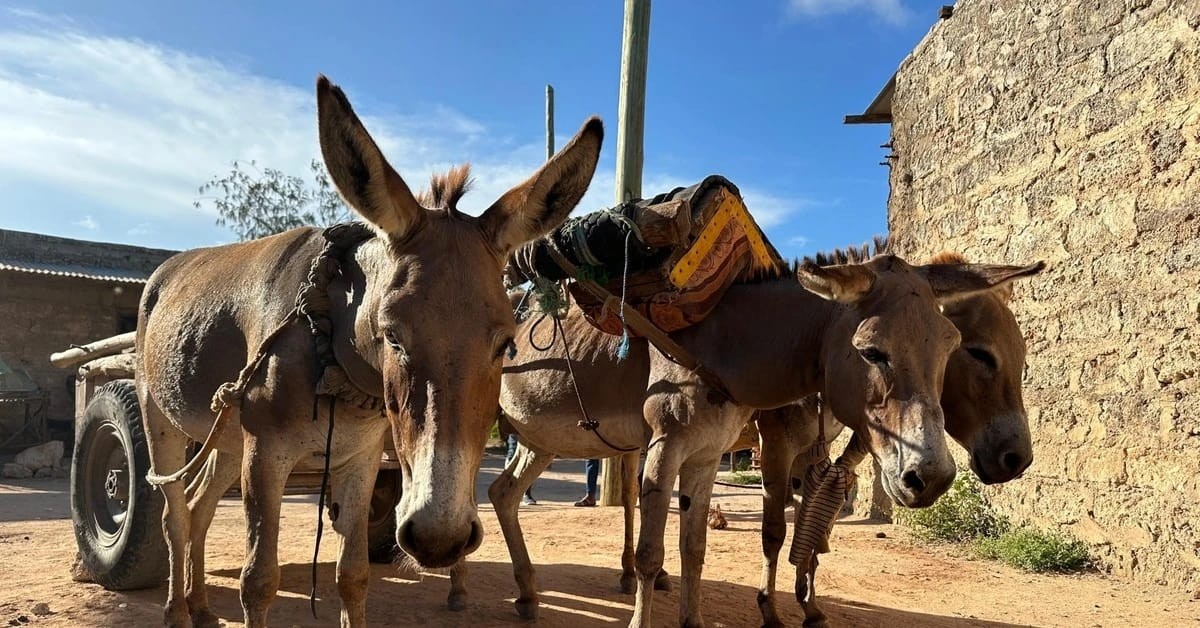
For thousands of households across Kenya, particularly in arid and semi-arid regions, donkeys remain essential economic assets. They transport water over long distances, carry agricultural produce to markets and provide affordable transport where motorized vehicles cannot easily operate. The theft or illegal slaughter of a donkey often deprives entire families of their primary source of income and mobility, forcing many deeper into poverty.
Kenya has over the years introduced several measures aimed at safeguarding its donkey population. Following a sharp increase in donkey theft after commercial slaughterhouses were licensed in 2016, the government suspended commercial donkey slaughter for skin production in 2020. In 2024, authorities also rolled out a multi-agency Rapid Results Initiative targeting illegal slaughter, trafficking and smuggling in twelve high-risk counties. At the continental level, the African Union endorsed a ban on the donkey skin trade in 2024, reinforcing efforts by member states to protect dwindling donkey populations.
Despite these interventions, illegal slaughter and trafficking continue to be reported in several counties, underscoring the need for stronger enforcement, improved intelligence gathering and greater regional collaboration. Criminal syndicates have increasingly shifted operations underground, exploiting remote areas and informal transport networks to evade authorities.
The challenge is further complicated by the absence of an up-to-date national census of Kenya's donkey population. Without accurate population data, policymakers face difficulties in measuring the true scale of losses, identifying high-risk regions and designing effective conservation and enforcement strategies. Experts argue that establishing a comprehensive national donkey census should become a priority to support evidence-based policy and resource allocation.
Concerns over the species' survival are not new. During discussions surrounding donkey conservation, reference was made to earlier projections by the Kenya Agricultural and Livestock Research Organisation (KALRO), which warned that if prevailing trends of slaughter and theft continued unchecked, Kenya risked losing a significant proportion of its donkey population within a decade. While claims that donkeys would become extinct by 2024 have circulated publicly, available KALRO findings more cautiously warned of severe population decline rather than confirming a scientifically established extinction date. KALRO has consistently linked declining numbers to commercial slaughter, rampant theft and the species' naturally slow reproductive rate.
Deputy Director of the National Crime Research Centre, Dr. Tioko Logiron, said the report provides a critical evidence base for addressing what has become both a security and socio-economic concern.
"This study provides a strong evidence base to guide policy and operational responses to an emerging security and socio-economic challenge. We encourage all stakeholders to work together to implement the recommendations and strengthen the protection of Kenya's donkey population. The Centre will continue to support research that informs effective crime prevention and public policy," he said.
The report ultimately argues that addressing donkey theft requires more than arrests alone. It calls for stronger legislative frameworks, tougher penalties for organized trafficking, enhanced border surveillance, improved inter-agency coordination, better livestock traceability systems and sustained regional cooperation among East African countries to dismantle transnational criminal networks.
As global demand for donkey skins continues to exert pressure on African donkey populations, the NCRC report presents a timely reminder that protecting Kenya's donkeys is not merely an animal welfare issue. It is a matter of safeguarding rural economies, preserving livelihoods, strengthening national security and ensuring that organized crime does not profit from exploiting one of the country's most valuable working animals.