
World Horse Day: Kenya's Growing Love for Horses Meets a Welfare Reckoning
Posted by EDITORIAL
Furaha Ya Farasi Launch Sparks Push for Stronger Laws, Responsible Ownership and Better Animal Care
In Summary:
Kenya is witnessing a rapid transformation in the role of horses—from symbols of prestige and sport to sources of livelihood, recreation and business. But as demand rises, a new report has uncovered widespread neglect, abuse and weak regulation, prompting the launch of Furaha Ya Farasi, Kenya's first dedicated horse welfare programme. Stakeholders are now urging stronger laws, owner education, registration systems and coordinated action to ensure the country's growing horse population is protected before a looming welfare crisis worsens.
On World Horse Day 2026, Kenya launched Furaha Ya Farasi, the country's first horse welfare programme, as a new report exposes widespread neglect, abuse and trafficking while calling for stronger laws, responsible ownership and better protection for horses.
Also Read: How Kenya is protecting its black Rhino Using Cutting-edge Technologies
Also Read: How Communities in the Northern Kenya are Restoring Land
For generations, horses in Kenya were largely associated with elite sport, ceremonial events, ranches and the disciplined ranks of the military and police. Today, however, that picture is rapidly changing. Horses are increasingly becoming part of everyday economic life, appearing at beaches, public parks, shopping malls, schools, tourism destinations and children's events. They are creating employment opportunities for trainers, handlers, photographers, tour operators and riding schools while introducing more Kenyans to equestrian activities than ever before.
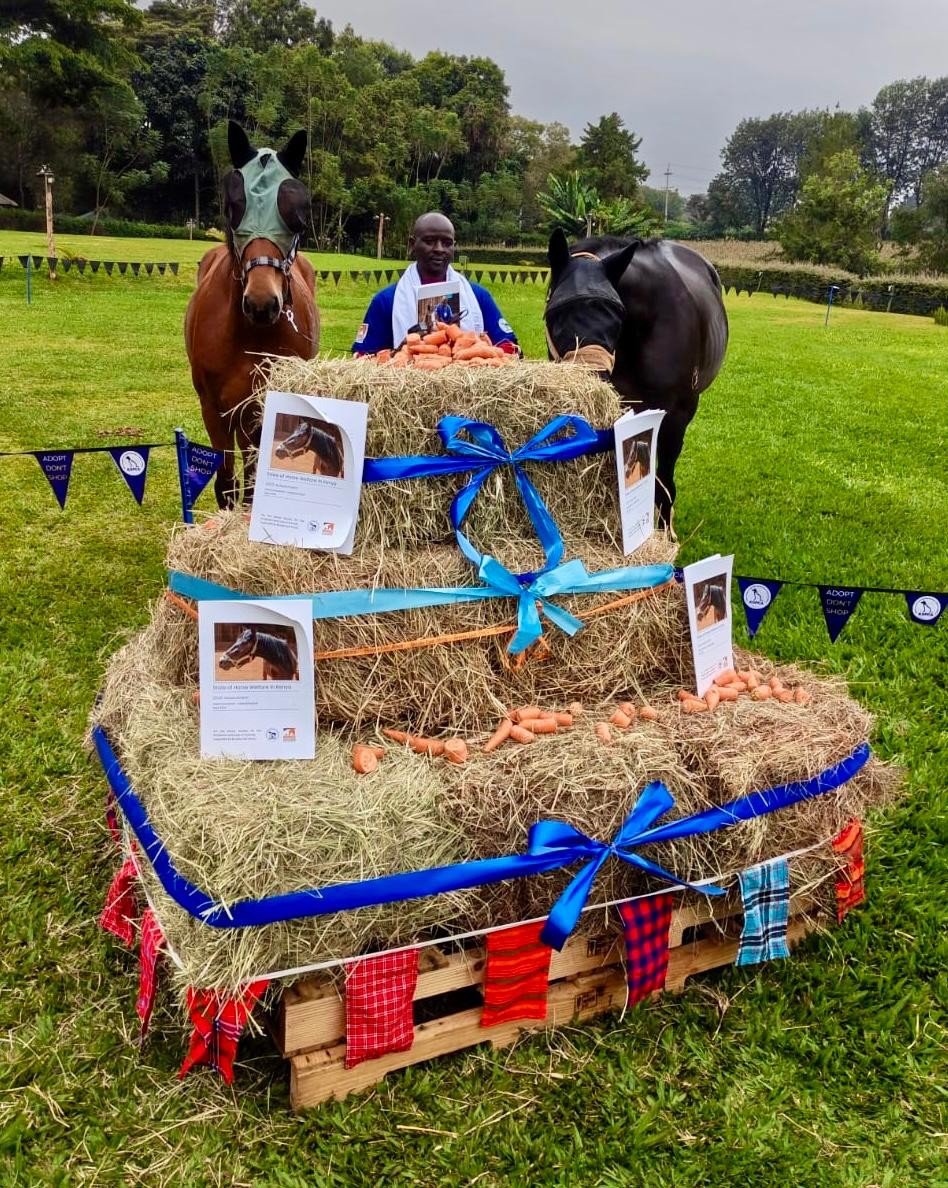
Yet behind the growing popularity lies a troubling reality that many members of the public rarely witness. On the eve of World Horse Day, marked globally every July 11, animal welfare organisations launched Furaha Ya Farasi, Kenya's first dedicated Horse Welfare Programme, alongside the release of the inaugural State of Horse Welfare in Kenya 2026 report. Developed through a partnership between Brooke East Africa and the Kenya Society for the Care and Protection of Animals (KSPCA), the initiative seeks to place horse welfare at the centre of a rapidly expanding industry.
The report paints a sobering picture. It documents cases of neglect, poor nutrition, inadequate shelter, improper handling, misuse, abuse and illegal cross-border movement of horses into Kenya. While some owners provide exemplary care, many animals continue to work under difficult conditions with limited veterinary attention and unsuitable equipment, often until they are physically exhausted.
Emma Ngugi, Chief Executive Officer of KSPCA, warned that the situation is deteriorating much faster than public awareness.
"The situation is worsening, and it's worsening rapidly," she said, noting that the increasing popularity of horses has not been matched by adequate welfare standards or responsible ownership practices.
Ngugi also challenged the perception that owning a horse is a simple hobby. She explained that proper horse care requires significant financial commitment, estimating that responsible ownership part with around KSh60,000 every month depending on the animal's needs. The budget covers quality feed, veterinary care, farrier services, shelter, equipment and trained handlers. Without adequate resources, she warned, owners may unintentionally expose horses to neglect despite good intentions.
That financial reality is becoming increasingly important as more Kenyans venture into horse-related businesses. What was once viewed primarily as a luxury activity is evolving into an economic sector supporting tourism, recreation and youth employment.
Brooke East Africa Project Manager Elijah Mithigi observed that horses are no longer defined solely by prestige or competitive sport. Instead, they are increasingly becoming sources of income for many Kenyans, particularly young entrepreneurs operating riding experiences in urban parks, beaches and recreational centres.
According to Mithigi, the diversification of horse use has created new opportunities but has simultaneously exposed major gaps in knowledge about responsible ownership. Many new owners have little understanding of proper handling techniques, appropriate harnessing, nutrition or preventive healthcare. He argued that education must become the first line of defence if Kenya is to prevent avoidable suffering.
Through the Furaha Ya Farasi programme, Brooke East Africa, KSPCA and industry stakeholders intend to promote training, awareness campaigns and practical guidance that equips owners with the skills necessary to improve horse welfare while supporting sustainable livelihoods.
The findings have also resonated strongly with government regulators.
Dr. Sabenzia, Senior Deputy Director of Veterinary Services in the State Department for Livestock, described the assessment as a timely wake-up call. She noted that many horses are still denied the internationally recognised Five Freedoms of animal welfare, including freedom from hunger, thirst, disease, injury, distress and the ability to express normal behaviours.
She acknowledged that Kenya currently lacks comprehensive systems to register horse owners, monitor horse populations or establish minimum welfare standards specific to horses. Current estimates place the national horse population between 3,000 and 6,000 animals, although officials believe the actual number may already be significantly higher as demand continues to rise.
For regulators, the report's recommendations arrive at a critical moment. Dr. Sabenzia revealed that the government is in the process of replacing the Prevention of Cruelty to Animals Act (Cap. 360), legislation dating back to 1962, with a modern Animal Welfare and Protection Bill. The proposed law seeks to strengthen penalties for cruelty, formally recognise companion animals as sentient beings capable of experiencing pain, fear and emotional distress, and align Kenya's welfare framework with international standards set by the World Organisation for Animal Health.
She further disclosed that authorities are developing an Animal Registration, Identification and Traceability Bill, which would establish systems for registering animals and owners while enabling officials to track animal movements. Such measures are expected to help combat illegal horse trafficking, improve disease surveillance and strengthen enforcement against animal abuse.
The issue of cross-border trafficking emerged as another major concern during discussions. Experts warned that illegally transported horses often endure long journeys without adequate food, water or veterinary care as traffickers attempt to evade authorities. Such practices not only compromise animal welfare but also undermine disease control and accountability within the sector.
The launch of Furaha Ya Farasi therefore represents more than the introduction of another conservation initiative. It reflects an acknowledgement that Kenya's relationship with horses has fundamentally changed and that policy, regulation and public awareness must evolve accordingly.
This year's World Horse Day carries a particularly powerful message. As the United Nations notes, horses have quietly contributed to human progress for centuries, supporting agriculture, transport, security, livelihoods and recreation while strengthening economies and communities. Their contribution often goes unnoticed precisely because it has become so familiar.
For Kenya, protecting that partnership will require more than admiration for these animals. It will demand responsible ownership, stronger institutions, better enforcement of welfare standards and sustained investment in education. As horses continue to find new roles in business, tourism and community life, stakeholders behind Furaha Ya Farasi hope the country will ensure that their welfare advances alongside their growing value to society.
World Horse Day therefore arrives not simply as a celebration of one of humanity's oldest companions, but as a reminder that the future of Kenya's growing horse industry will ultimately be judged not by the number of horses it produces, but by how well it protects those that serve it.