
When Giving Life Becomes a Fight for Survival: Kenya’s Maternal Health Crisis
Posted by EDITORIAL
Kenya recorded 480 maternal deaths in six months. This health feature examines why Nakuru and Kakamega carry a heavy maternal health burden and what the EWENE data reveals about accountability, healthcare gaps and preventable deaths.
Previous: Who Benefits When the Kenyan Government Borrows?
In Summary
- Kenya recorded 480 maternal deaths in six months, turning a national health statistic into a painful question of where the health system is failing women and why counties such as Nakuru and Kakamega continue to carry a heavy burden.
- The challenge is bigger than getting women into hospitals: EWENE data points to delays in seeking care, reaching facilities and, most critically, receiving timely, quality care once there.
480 Mothers, Six Months and One Uncomfortable Question: Why Are Nakuru and Kakamega Losing So Many Women?
Also Read: How Kenya Observed World Prematuiry Day
A mother walks into a health facility expecting to leave with her newborn. Her family waits outside, imagining the moment they will hear the first cry, see the baby wrapped in a blanket and take both mother and child home.
But for hundreds of Kenyan families, that moment never comes.
In just six months, Kenya recorded 480 maternal deaths through its health information systems; a figure presented to editors during the Wanahabari Centre and Kenya Editors Guild roundtable on maternal, newborn, child health and nutrition held in Nairobi on August 27, 2026. The meeting brought together editors, health experts, Ministry of Health representatives and partners under the Okoa Mama na Mtoto Initiative to confront a question that statistics alone cannot answer: why are Kenyan women still dying while giving life?
The number is disturbing. But perhaps more disturbing is what happens when the 480 is divided into individual stories.
Four hundred and eighty is not simply a figure on a dashboard. It represents mothers who had names, families, plans and people waiting for them. It represents children who may grow up knowing their mothers only through photographs and stories told by relatives. It represents fathers, grandparents and communities forced to reorganise their lives around a loss that, in many cases, should never have happened.
That is why Polycarp Oyoo of the International Centre for Reproductive Health Kenya (ICRHK), speaking to editors through the Okoa Mama na Mtoto Initiative, challenged the media to look beyond the numbers.
“Maternal health is not just a health statistic; it is a metric of governance, accountability, and social justice. We need to humanize the statistics,” Oyoo told editors.
And perhaps nowhere does that challenge become more urgent than in the counties appearing prominently in the maternal death data.
Nakuru and Kakamega are among the counties carrying a high burden of maternal and newborn deaths under Kenya's current EWENE response. Both are also among the 26 counties targeted by the national six-month Rapid Results Initiative designed to accelerate reductions in facility maternal deaths, neonatal deaths and fresh stillbirths.
Why Nakuru? Why Kakamega?
The question should not be interpreted as an accusation against the counties or their health workers. It is an invitation to investigate.
What is happening inside their health facilities? Are women arriving too late? Are referrals working? Are ambulances available when emergencies occur? Are maternity units adequately staffed during the hours when complications become emergencies? Are essential medicines and blood available when they are needed? Are maternal deaths being reviewed promptly, and are the lessons from those reviews actually translated into changes in practice?
These are not abstract questions.
They are questions that determine whether a woman who arrives at a hospital bleeding leaves alive.
Kenya's EWENE framework offers an important clue. The national programme identifies three major delays associated with maternal and newborn deaths: the delay in deciding to seek care, the delay in reaching care, and the delay in receiving quality care after reaching a facility. According to EWENE, the third delay accounts for the largest share 45 per cent followed by the first delay at 30 per cent and the second at 25 per cent.
That finding changes the conversation.
For years, maternal health discussions have often focused on whether women attended antenatal clinics or whether they reached hospitals. But a woman can do everything expected of her: recognise danger, seek help and reach a health facility — and still die if the care she receives is delayed or inadequate.
The hospital, therefore, cannot simply be the end point of the journey. It must be the place where the emergency is successfully managed.
EWENE's own assessment shows the scale of the challenge. Only 37 per cent of facilities meet all basic Emergency Obstetric and Newborn Care standards, while shortages of critical commodities remain a concern. The programme reports stockouts of oxytocin in 40 per cent of facilities, magnesium sulphate in 48 per cent and benzyl penicillin in 47 per cent.
For a mother experiencing a life-threatening complication, a medicine stockout is not an administrative inconvenience.It can become the difference between returning home and never seeing home again.
The problem also begins long before labour.
Maternal health does not begin when labour starts. It begins with reproductive health information, access to family planning, quality antenatal care, early recognition of danger signs and the ability to reach an appropriate facility when complications occur.
The Wanahabari Centre and KEG roundtable was therefore not merely a meeting about increasing the number of maternal health stories published in Kenyan newsrooms. It was an attempt to change what happens after the headline.
There is also a danger in treating counties with low reported deaths as automatically successful. As Oyoo challenged editors, counties reporting few or no maternal deaths should also be examined. Low numbers may represent genuine progress, but they can also raise questions about the completeness and quality of reporting.
That is why the EWENE dashboard and other health information systems matter.Data can tell journalists where to look. But data alone cannot tell the entire story.
To understand why a mother died, journalists must walk beyond the spreadsheet and into communities, maternity wards, referral systems and county health structures. They must listen to health workers working under pressure, families who have lost loved ones and women who survived complicated pregnancies.
The 480 deaths recorded in six months should therefore not become another number that briefly dominates the news cycle before disappearing.
Kenya has already made a national commitment through EWENE to accelerate the fight against preventable maternal and newborn deaths. The plan targets 26 high-burden counties, including Nakuru and Kakamega, and seeks measurable reductions in deaths through stronger health systems, better data, improved emergency care, trained health workers and greater accountability.
The question now is whether that commitment will be visible where it matters most — in the maternity ward, in the ambulance, in the pharmacy, in the blood bank, in the referral system and, ultimately, in whether a mother survives.
Because behind every maternal death is a story And behind 480 deaths are 480 stories that Kenya cannot afford to forget.
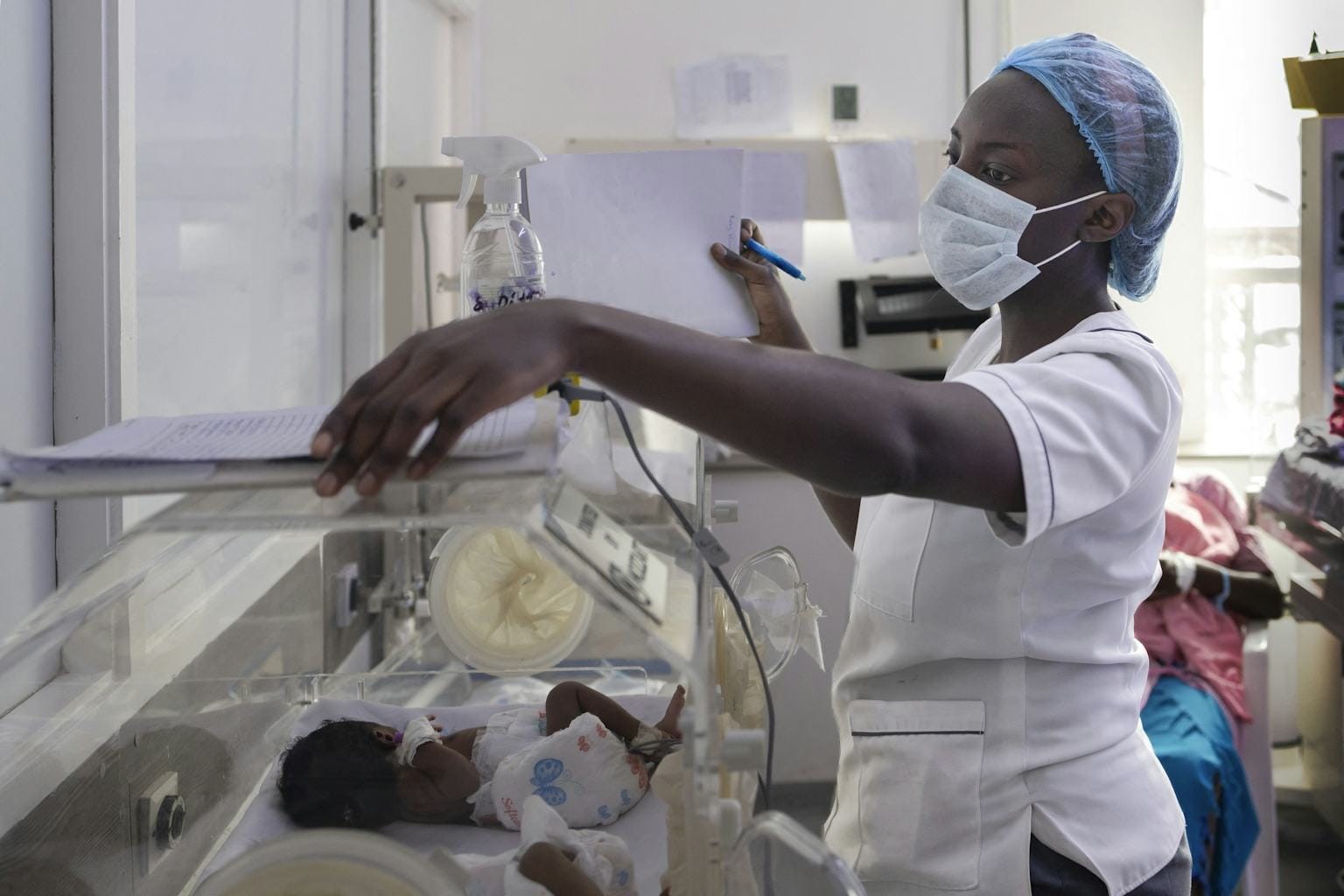
COVER PHOTO CREDITS: UOPS (Inside Maternal Wards in Kenya)